Pomodoro Technique Benefits: What Changes When You Work This Way
From reduced mental fatigue to better time estimation, here's what the Pomodoro Technique actually delivers — and who it works best for (and who it doesn't suit).
- pomodoro
- productivity
- focus
- time management
- work habits

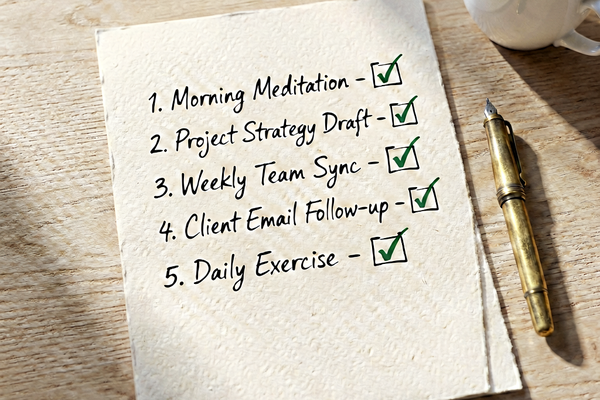
The Pomodoro Technique has been around long enough that the question isn’t whether it’s a passing trend. The question is whether the benefits people report from using it are real, which ones matter most, and whether they apply to your particular work and working style.
The honest answer is: several genuine benefits, a few important limitations, and a clear picture of who it helps most.
What Actually Changes
Reduced Mental Fatigue
The most consistent benefit people report from Pomodoro sessions is that they feel less drained at the end of a workday — not because they worked less, but because they rested more intentionally.
Without a structured break system, most people work in a way that looks continuous but isn’t. You pause to check Twitter, pour a second coffee, or reread the last paragraph you wrote without processing it. These micro-pauses aren’t rest; they’re either distraction or nothing. What they’re not is deliberate cognitive recovery.
Forced breaks — a 5-minute break after every 25 minutes of focused work — replace involuntary drift with actual rest. You step away, let your attention release its grip, and return to the task with something left in reserve. The afternoon slump that many desk workers experience is partly a product of accumulated fatigue from poor break habits. A structured work/rest schedule doesn’t eliminate fatigue, but it distributes it differently.
Improved Time Estimation
Most people are bad at estimating how long things take. This isn’t a character flaw — it’s a known cognitive bias called the planning fallacy, identified by Daniel Kahneman and Amos Tversky, describing the tendency to underestimate task duration while overestimating how much you’ll accomplish in a given period.
Using pomodoros gives you a concrete unit for measuring actual output. Once you’ve tracked your work for a few weeks, you start accumulating real data: this kind of task takes three pomodoros; that kind takes one; writing a first draft typically takes six. Your future estimates get calibrated against actual observed behavior rather than optimistic guessing.
This is one of the Pomodoro Technique’s less-discussed but practically valuable outcomes. The scheduling improvements that come from accurate time estimation compound over weeks and months.
Better Focus During Work Sessions
The artificially-created time pressure of a running timer reliably narrows attention in the moment. You know the interval will end — distracting yourself for the full 25 minutes is the worst possible outcome, because you’ll have nothing to show for the ring — so you return to the task sooner when your mind wanders.
This isn’t a complex psychological mechanism. It’s a simple application of mild urgency. But mild urgency, consistently applied across a workday, adds up to meaningfully more focused time than most people manage without some external structure.
Reduced Procrastination
The technique is widely recommended for procrastination, and the mechanism is straightforward: it lowers the activation energy required to start working.
“Finish the project” is a task without a natural starting point. “Work on the project for 25 minutes” is not. You’re not committing to finishing, or to it going well, or to solving every problem — you’re committing to 25 minutes of effort. That commitment is small enough that most people can make it even when motivation is low.
The first pomodoro on a dreaded task is almost always the hardest one. Once you’re in it and making progress, the resistance diminishes. The Pomodoro Technique doesn’t fix procrastination — nothing external can do that entirely — but it provides a reliable way to get started when starting is the problem.
Limitations Worth Knowing
A technique that suits everyone doesn’t exist. The Pomodoro Technique has genuine limitations that matter depending on how you work.
Interruption-Heavy Jobs
The method requires protecting 25-minute blocks from interruption. This is achievable for many knowledge workers, but it’s structurally incompatible with roles that require constant availability: customer-facing support, management in active organizations, nursing and clinical care, and any job where quick responses to others are part of the core value you provide.
Forcing Pomodoro structure onto an inherently interrupt-driven job creates more friction than it resolves. In those contexts, other approaches — like processing requests in defined batches, or structuring admin tasks vs. focus tasks into separate parts of the day — tend to work better.
Creative Deep Work
For some creative and analytical work, 25-minute intervals feel like they end just when things get interesting. Writing a complex argument, designing a system architecture, or solving a subtle bug may require 45 to 90 minutes of sustained immersion. The 25-minute timer interrupts that immersion at the worst possible moment.
If your work regularly produces flow states — periods of deep, almost effortless engagement — and the Pomodoro timer consistently pulls you out of them, that’s a real cost. Extended intervals (50/10 or 90/20) or the Flowtime approach (work until you’re naturally ready to stop) may suit you better.
Pair Programming and Collaboration
Collaborative work has its own rhythm. Pair programming, whiteboard sessions, and live collaborative document editing don’t respect a private timer. Interrupting a collaborative flow because your 25 minutes ended creates friction for the other person and disrupts the shared working state.
The Pomodoro Technique is fundamentally a solo focus tool. It can work alongside collaboration — you use it for your individual work blocks and not during collaborative sessions — but it doesn’t translate directly to team use.
Who It Works Best For
The Pomodoro Technique tends to deliver the clearest benefits for people who:
- Do primarily solo, focused, self-directed work (writing, coding, studying, research)
- Work on tasks where they have control over interruptions, at least for defined periods
- Struggle more with starting and sustaining focus than with anything else
- Are building better work habits and need external structure to support that
Students and remote workers are the canonical users, and the fit is obvious: both groups often have significant flexibility over their own schedules and significant challenges with self-regulation in unstructured environments. The technique provides just enough external structure to make self-direction easier.
It’s less useful for highly experienced professionals who have already internalized effective focus habits and don’t need the external structure, or for anyone in roles where the work fundamentally can’t be time-boxed.
The Bottom Line
The Pomodoro Technique is a practical tool for people who struggle with sustained focus, procrastination, or poor time estimation. Its benefits are real and accumulate over time. Its limitations are real too, and there’s no value in applying it dogmatically to work it doesn’t fit.
If you’ve been on the fence, the best argument for trying it is that the cost of trying is essentially zero: a timer, a task, and 25 minutes.

Related reading
-
How to Use the Pomodoro Technique: A Step-by-Step Walkthrough
A practical guide to running your first Pomodoro session — choosing tasks, handling interruptions, what to do on breaks, and how to adapt interval length to your work style.
-
What Is the Pomodoro Technique? The Focus Method Millions Use
The Pomodoro Technique breaks work into 25-minute focused sprints with short breaks. Learn its origins, structure, psychology, and why it still works decades later.
-
The 52/17 Rule: Is It Better Than Pomodoro?
The 52/17 rule came from a DeskTime company study, not peer-reviewed research. Here's what it actually says, how it compares to Pomodoro, and which approach suits different types of work.