The 52/17 Rule: Is It Better Than Pomodoro?
The 52/17 rule came from a DeskTime company study, not peer-reviewed research. Here's what it actually says, how it compares to Pomodoro, and which approach suits different types of work.
- 52/17 rule
- pomodoro
- productivity
- focus
- deep work
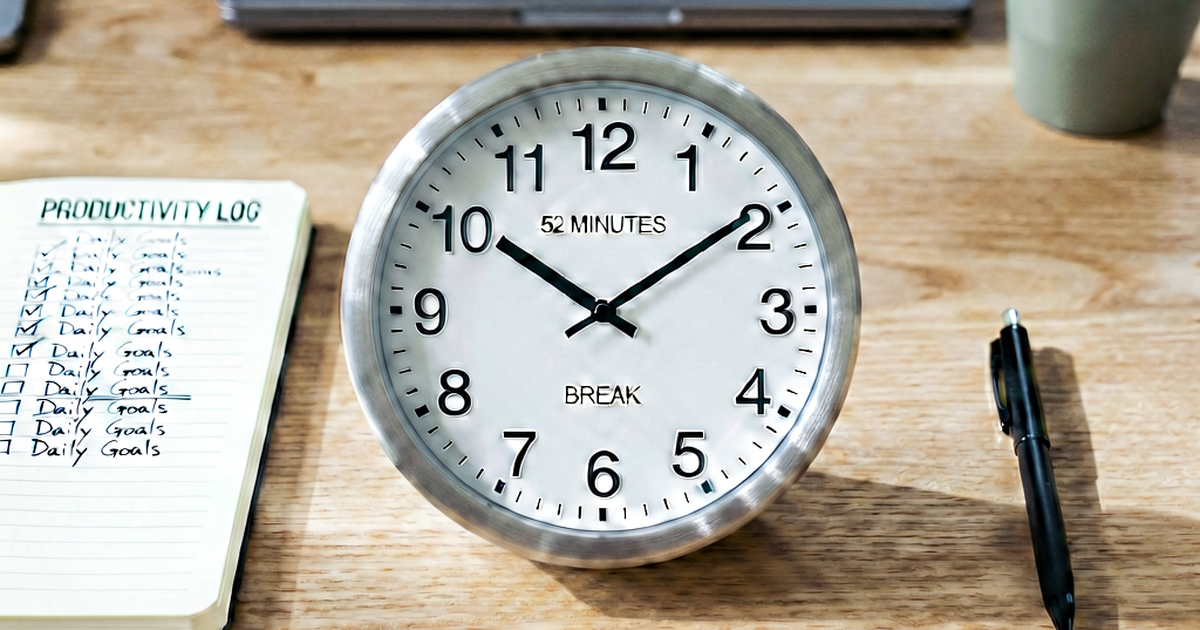
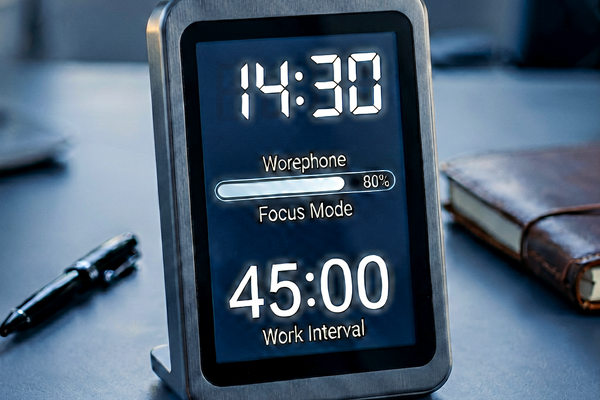
Around 2014, a productivity claim started circulating widely: the most productive workers work for exactly 52 minutes and then rest for 17. The figure was specific enough to sound scientific, and it spread quickly.
The origin matters here, and it’s often misrepresented.
Where the 52/17 Numbers Actually Came From
The 52/17 statistic came from Draugiem Group, a Latvian software company, via an analysis of data from their time-tracking app DeskTime. Their analysis looked at user activity patterns and identified that the top 10% most productive users — as measured by the app’s own productivity scoring — tended to work in blocks of roughly 52 minutes followed by breaks of roughly 17 minutes.
A few important caveats that often get dropped from the summary:
This was a company’s internal analysis of its own app’s data, not a peer-reviewed research study. The “top 10% most productive” designation was based on DeskTime’s proprietary productivity scoring, not an independent measure of output quality. And the 52/17 figures were averages across a sample of users — the actual distribution of work intervals among those users was presumably variable.
None of this means the finding is wrong or useless. It’s a real observation about real behavior. But it shouldn’t be described as a neuroscience discovery or a universally validated productivity law. It’s a data point about how some people who were highly rated by one app tended to structure their time.
With that context established: what does the 52/17 pattern actually suggest, and how does it compare to Pomodoro?
The Core Difference
The Pomodoro Technique uses 25-minute work blocks and 5-minute breaks in a rigid, repeating structure with a longer break after every four cycles. The 52/17 approach uses ~52-minute work blocks and ~17-minute breaks, without the same structured cycle enforcement.
The work-to-rest ratio is similar: Pomodoro gives you about 83% work time; 52/17 gives you about 75%. The 52/17 breaks are proportionally longer, and the work blocks are more than double the length.
This difference in block length is the most meaningful distinction. Fifty-two minutes allows considerably more time to get into deep work before the break arrives. For tasks with a significant cognitive warm-up period — complex writing, intricate problem-solving, extended analysis — the longer interval may genuinely suit the work better.
When 52/17 Might Work Better for You
Deep work with long context-loading times. If the first 10–15 minutes of any work session are spent re-establishing where you were and getting into the problem, a 25-minute Pomodoro block means half or more of your interval is overhead. A 52-minute block reduces that overhead as a proportion of the total.
Less frequent transitions suit your cognitive style. Some people find the Pomodoro timer’s relatively frequent rings disruptive to their rhythm. The 52/17 pattern involves fewer transitions in a given workday, which may feel less choppy.
You prefer longer, more restorative breaks. A 5-minute break is barely time to stand up, get water, and sit back down. A 17-minute break allows a short walk, a real meal, or a meaningful change of environment. If brief breaks leave you feeling like you didn’t rest, the longer 52/17 break structure may suit you better.
When Pomodoro Works Better
Procrastination and resistance to starting. A 52-minute commitment is a much larger initial ask than a 25-minute one. When the primary challenge is getting started, the Pomodoro Technique’s lower activation barrier is a significant advantage.
Task variety or short-task workflows. If your workday involves many different kinds of tasks that naturally take 10–20 minutes each, a 52-minute block pushes you to either bundle tasks artificially or stop the timer early. Shorter Pomodoro blocks fit more naturally into task-based work.
Building a new habit. The Pomodoro Technique’s structured cycle (four pomodoros, then a long break) provides a cleaner framework for habit formation. It gives you a daily target — say, eight pomodoros — that’s easy to track and feel satisfied by.
The Flowtime Technique: A Third Option
Both Pomodoro and 52/17 tell you when to stop. The Flowtime Technique doesn’t. Coined by Caio Carneiro, it works like this: note your start time, work until you notice your attention drifting or you finish a natural stopping point, then rest for a proportional amount of time (roughly 5 minutes for every 25 minutes of work). There’s no timer running.
Flowtime suits people who regularly reach flow states and don’t want to interrupt them with a predetermined ring. It requires more self-awareness than either Pomodoro or 52/17 — you have to notice when your focus has degraded rather than waiting for an external signal — but it can feel less mechanical for people who find timers anxiety-inducing or who work on creative tasks that have irregular rhythms.
The tradeoff is that it provides weaker structure for people who need external accountability to avoid drifting.
The One Thing All Three Approaches Agree On
Work blocks followed by intentional rest beats continuous, unbroken work sessions.
All three methods — Pomodoro, 52/17, Flowtime — share this core insight. The differences are in interval length, flexibility, and how much the method imposes structure versus asking you to self-regulate. Research on focused work and cognitive recovery broadly supports the value of scheduled rest, though it doesn’t prescribe a specific ratio.
Which Should You Use?
The honest answer is: the one you’ll actually maintain.
Pomodoro is better for starting from scratch, dealing with procrastination, or doing varied work with short task cycles. The 52/17 pattern may be better for deep, single-topic work where you need sustained immersion. Flowtime suits people who have already internalized good focus habits and want less mechanical structure.
You’re allowed to try all three across different weeks or different types of work. You’re also allowed to settle on a hybrid — say, 45/10 — that matches neither name but fits your actual experience. No productivity framework is worth defending more than your own output.
The 52-minute number isn’t magic. Neither is 25. What’s consistent across every version of structured focused work is the principle underneath: work deliberately, rest deliberately, and repeat.

Related reading
-
Focus Techniques for Studying: 7 Methods Compared
Pomodoro, deep work, body doubling, time blocking, and more — seven focus techniques for studying compared honestly, with real pros and cons for each.
-
How to Use the Pomodoro Technique: A Step-by-Step Walkthrough
A practical guide to running your first Pomodoro session — choosing tasks, handling interruptions, what to do on breaks, and how to adapt interval length to your work style.
-
What Is the Pomodoro Technique? The Focus Method Millions Use
The Pomodoro Technique breaks work into 25-minute focused sprints with short breaks. Learn its origins, structure, psychology, and why it still works decades later.